Kilchurn Castle, Loch Awe
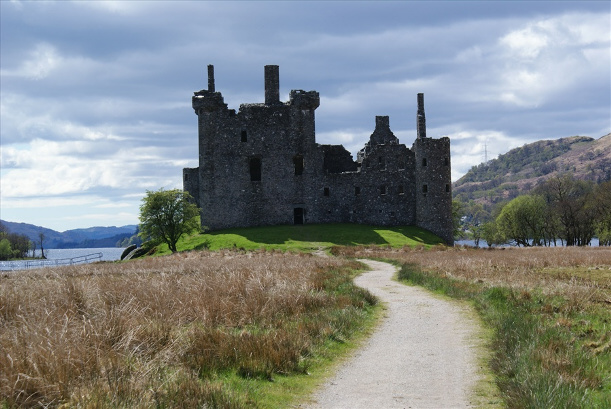
Kilchurn Castle, standing proudly at the northeastern end of Loch Awe, is one of Scotland’s most picturesque and iconic ruins. Its stunning location, framed by the tranquil waters of Loch Awe and the rugged Ben Cruachan mountain range, makes it a favourite destination for history lovers, photographers, and nature enthusiasts. Built in the mid-15th century, Kilchurn Castle was both a military fortress and the grand residence of the Campbell Clan of Glenorchy an influential family that played a major role in Scottish history.
The History of Kilchurn Castle
Kilchurn Castle was constructed around 1450 by Sir Colin Campbell the first Lord of Glenorchy, as a base to control the lands surrounding Loch Awe. The original structure was a tower house with a courtyard, which would later be expanded to include barracks and additional defensive features. The castle’s location on a small peninsula allowed it to command access to the glen and control the important trade routes across the loch.
Over time, Kilchurn Castle became the seat of the powerful Campbells of Glenorchy, later known as the Earls of Breadalbane, a branch of the larger Clan Campbell. The Campbells were deeply involved in the political and military life of Scotland, and Kilchurn played a key role in their efforts to maintain their influence over the Highlands.
Transformation into a Military Garrison
By the late 17th century Kilchurn Castle underwent significant changes. With increasing unrest during the Jacobite risings the castle was transformed into a government garrison. In 1690 Sir John Campbell, the 1st Earl of Breadalbane, added a long range of barracks capable of housing up to 200 soldiers, making Kilchurn an important base for government troops in the Highlands. These fortifications were designed to defend against local rebellions, particularly from Jacobite supporters loyal to the exiled Stuart dynasty.
Kilchurn’s strategic location meant it was well-suited for its role as a garrison, controlling access to the Western Highlands and providing a base from which to project military power across the region. The castle’s high walls, crenellated towers, and new barracks made it one of the most formidable military fortresses of its time.
Abandonment and Ruin
Despite its military importance, Kilchurn Castle’s role as a garrison was short-lived. By the mid-18th century, following the defeat of the Jacobite forces in the Battle of Culloden (1746), the castle’s significance declined. The Campbells moved their seat to Taymouth Castle a grand estate further to the east, leaving Kilchurn largely abandoned.
In 1760 the castle was heavily damaged by a lightning strike which is believed to have caused the partial collapse of one of its walls. This natural disaster, combined with the Campbells' relocation, marked the beginning of Kilchurn’s transformation from a grand residence and military outpost to the atmospheric ruin that it is today.
Kilchurn Castle Today
Although Kilchurn Castle is now a ruin, it remains one of Scotland’s most iconic historical sites. The castle’s silhouette, framed by the majestic peaks of Ben Cruachan and reflected in the still waters of Loch Awe, creates a picture-perfect scene that has made it a favourite among photographers and travellers.
Visitors to the castle can explore the ruins, including the tower house the great hall, and the remains of the barracks. While much of the interior is open to the elements, enough of the original structure remains to provide a vivid sense of its past grandeur. The site’s location on a peninsula adds to its dramatic appeal, and the walk to the castle from nearby parking areas is a peaceful way to experience the beauty of the surrounding landscape.
Access to Kilchurn Castle is free, and the site is usually open during the summer months. For those arriving by boat, the view from Loch Awe is particularly striking, offering a glimpse of the castle as it would have appeared to visitors and traders centuries ago.
Kilchurn’s Legacy
Kilchurn Castle stands as a testament to the shifting fortunes of Scotland’s clans and the turbulent history of the Highlands. From its origins as a Campbell stronghold to its role as a government garrison during the Jacobite uprisings, the castle’s history reflects the broader story of conflict, loyalty, and power struggles that defined much of Scotland’s medieval and early modern past.
Today, Kilchurn is a beloved ruin, its stark beauty and historical significance drawing visitors from around the world. Whether approached by land or admired from the waters of Loch Awe, Kilchurn Castle offers a captivating journey into Scotland’s past, set against one of the most beautiful backdrops in the country. The combination of history, architecture, and natural beauty makes Kilchurn a must-see for anyone exploring the Argyll region or the Scottish Highlands.